


Daytime sleepiness is much more than simple tiredness after a long workday. It is a constant, persistent urge to sleep that prevents you from living a full and active life. If this feeling is familiar to you, it may be a serious signal — your body is either not getting enough quality rest or is dealing with deeper issues. Understanding what lies behind this feeling is the first step toward a more energized daily routine.
What lies behind constant fatigue
Have you ever woken up in the morning feeling as if you didn’t sleep at all? This is not only unpleasant but also harmful. Such persistent daytime sleepiness affects everything — from your ability to concentrate at work or in studies to emotional balance and even safety while driving. It’s like trying to use a phone whose battery is always on the verge of dying — even if you charge it briefly, it drains again just as quickly.
This condition is very different from ordinary tiredness, which disappears after proper rest. Pathological sleepiness is stubborn and often signals more serious issues. Interestingly, in Lithuania it is quite common. One study showed that nearly one-third (28.4%) of young people complain about increased sleepiness. Another study found that 59.4% of respondents rated their sleep quality as poor, which is directly linked to feeling unwell during the day. You can read more about these studies in the publication by the Lithuanian University of Health Sciences.
Why it’s important to pay attention
Ignoring a constant urge to sleep is like ignoring a warning light on your car’s dashboard. At first it may seem minor, but over time it can develop into serious problems.
- Reduced productivity. It becomes difficult to concentrate, make decisions, or think creatively.
- Emotional instability. Fatigue makes us more irritable and more sensitive to stress.
- Physical health risks. Long-term lack of sleep is linked to heart disease, obesity, and a weakened immune system.
To solve this issue, it’s best to start with the basics — a high-quality sleep environment. Properly chosen bedding can be the first step toward better rest. For example, natural cotton bedding sets allow the skin to breathe and help maintain an optimal body temperature, ensuring calmer sleep. In this article, we will explore the main causes of sleepiness, ways to recognize them, and practical solutions to help restore your energy and daily balance.
Hidden causes of sleepiness you may not know about
We often assume that daytime sleepiness is simply a sign of a poorly slept night. But the truth is far more complex. Think of your energy like a bank account: lack of sleep is an obvious withdrawal, but there are also hidden fees that drain your resources unnoticed.
These “hidden fees” are various underlying causes that steal your alertness even when you seem to sleep enough. They may include sleep disorders that disrupt sleep quality, certain medical conditions, or even everyday medications.
Sleep disorders — the thieves of your rest
Have you ever slept the recommended number of hours but woken up more tired than before going to bed? This often happens when invisible enemies — sleep disorders — disrupt your sleep quality.
- Obstructive sleep apnea. This is a condition where breathing briefly stops during sleep. Each pause forces the brain to wake up for a moment, even though the person usually doesn't remember it. It’s similar to trying to charge a phone with a cable that constantly disconnects — even if it’s plugged in all night, the battery is still half-empty by morning.
- Restless legs syndrome. This neurological disorder causes an irresistible urge to move the legs, especially in the evening and at night. It not only interferes with falling asleep but also disrupts deep, restorative sleep.
- Other disorders. Daytime sleepiness can also be caused by narcolepsy (sudden, uncontrollable sleep episodes) or parasomnias (sleepwalking, nightmares), which fragment sleep into unrefreshing pieces.
Daytime sleepiness is not just an unpleasant feeling — it is a serious warning signal. It negatively affects productivity, emotional well-being, and even physical safety, for example, increasing the risk of accidents on the road.
This table summarizes the main causes of daytime sleepiness, their symptoms, and possible solutions.
Comparison of sleepiness causes
| Cause group | Common examples | Typical symptoms | First steps |
|---|---|---|---|
| Sleep disorders | Sleep apnea, restless legs syndrome | Snoring, breathing pauses, waking up tired | Consult a sleep specialist, undergo a sleep study |
| Medical conditions | Anemia, hypothyroidism, vitamin deficiencies | Constant weakness, feeling cold, hair loss | Get blood tests, consult your family doctor |
| Effects of medication | Antihistamines, antidepressants | Sleepiness begins after starting a new medication | Consult your doctor about adjusting or changing medications |
| Lifestyle | Lack of sleep, poor diet, stress | Difficulty concentrating, irritability, low energy in the afternoon | Improve sleep hygiene, balance nutrition |
This overview helps illustrate that sleepiness is not a straightforward symptom. It’s important to evaluate all possible causes to find the most effective solution.
The influence of medical conditions and medication
Our body is a complex system where everything is interconnected. Sometimes daytime sleepiness is a symptom that signals issues occurring elsewhere in the body.
For example, anemia (iron deficiency) means the blood cannot effectively transport oxygen, causing constant fatigue and low energy. Hypothyroidism slows down the metabolism, making you feel sluggish and sleepy. Even a lack of vitamin D or B12 can trigger similar symptoms.
It’s also worth taking a closer look at your medicine cabinet. Some medications have side effects that cause sleepiness. These may include certain antidepressants, allergy medications (antihistamines), blood pressure regulators, or strong painkillers. If you notice that fatigue began after starting a new medication, be sure to consult your doctor.
When fatigue becomes a medical issue
Everyone has days when they feel tired — it’s a completely normal reaction to a stressful schedule or a night of poor sleep. But how do you know when ordinary fatigue crosses the line and becomes a sign of a more serious problem?
Let’s compare it like this: ordinary tiredness is like a phone battery drained after a long, active day. All you need is to “charge” it overnight — get a good sleep — and in the morning you’re energized again. But chronic, pathological daytime sleepiness is more like a broken battery. Even after a full night’s rest, it simply can’t hold energy. You wake up feeling exhausted, and the need to lie down follows you all day.
Warning signs you shouldn’t ignore
When sleepiness begins to interfere with daily activities, it is no longer just regular tiredness. There are several clear signs indicating it’s time to take this seriously:
- You fall asleep in inappropriate situations. If you nod off while driving, during an important meeting, or even in the middle of a conversation — this is a serious warning sign.
- You constantly feel “brain fog.” It becomes difficult to focus, remember simple things, or make decisions.
- Physical exhaustion without a clear cause. You feel drained even after minimal physical effort, for example, climbing stairs.
- You withdraw from social life. You begin avoiding meeting friends or engaging in activities you enjoy simply because you don’t have the energy.
Sleepiness is not just a personal inconvenience. It is a serious public health issue with real and dangerous consequences.
This symptom affects not only your well-being but also the safety of others. For example, around 45% of traffic accidents in Lithuania occur because drivers are sleepy. People suffering from chronic lack of sleep are not only worse at maintaining focus but also become more irritable and more sensitive to stress. Over time, this can contribute to high blood pressure or even heart disease. You can learn more about how sleep affects health by reading this detailed resource.
If you recognized yourself in these descriptions, it’s important to understand — this is not a normal state you should simply accept. It’s a clear sign that your body needs help, and ignoring these signals can be dangerous.
Practical steps for better sleep and more energy
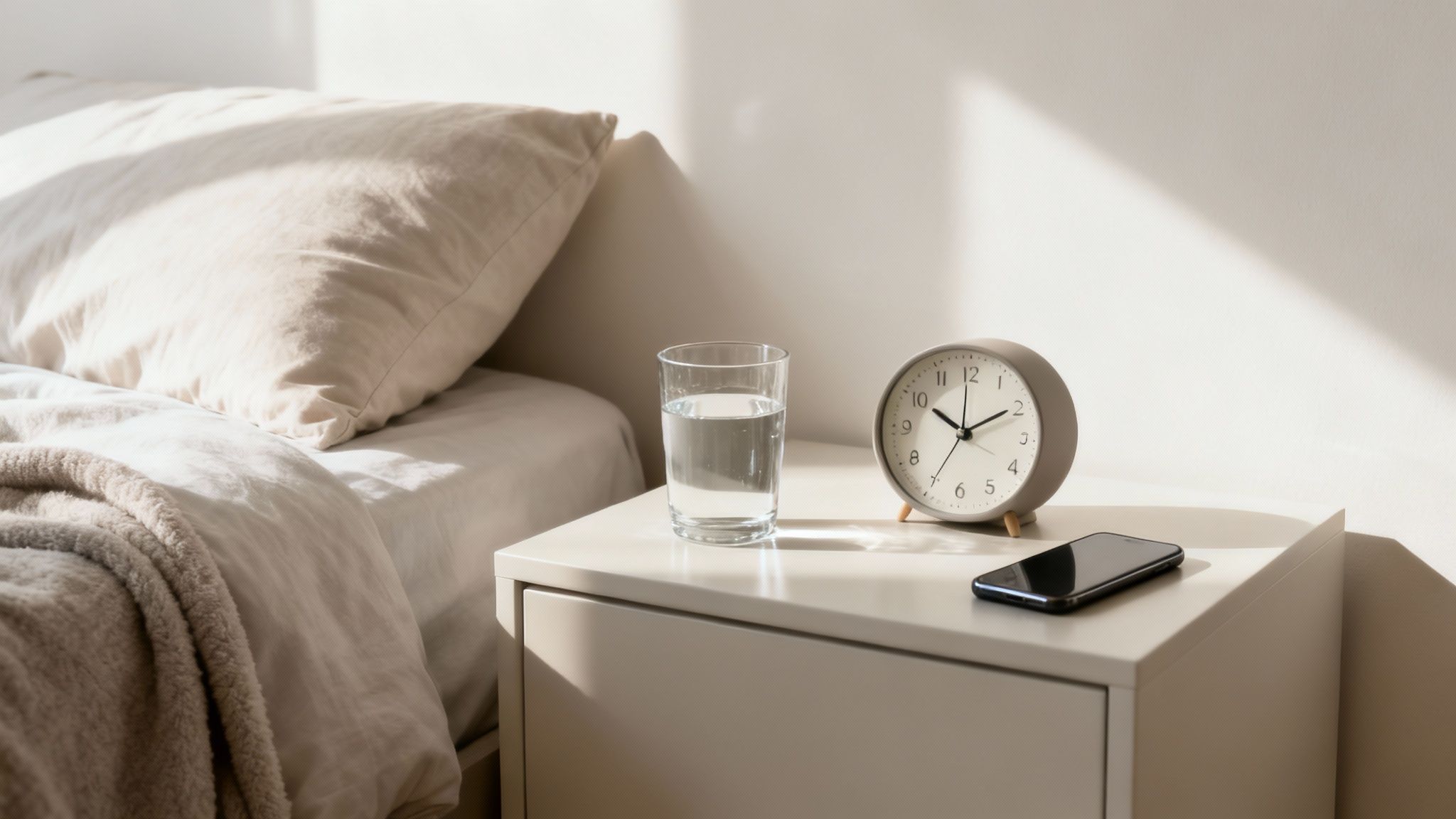
Falling into the vicious cycle where daytime sleepiness destroys productivity, and evening anxiety about unfinished tasks prevents you from falling asleep, can be truly exhausting. The good news? There is a way out — and it’s often simpler than it seems. Regaining control doesn’t require complicated medical procedures — often, a few conscious lifestyle changes are enough.
All these changes fall into two main areas: sleep hygiene, which involves your sleep environment and routines, and overall lifestyle adjustments that directly influence your daily energy levels.
Sleep hygiene — the foundation of good rest
Sleep hygiene isn’t about cleanliness. It’s a set of habits and rules that help your body and mind properly prepare for quality rest. You could think of it as an athlete’s warm-up before an important competition — without it, it’s hard to expect good results.
The most important step is a consistent sleep schedule. Try to go to bed and wake up at the same time every day. Yes, even on weekends. This helps “calibrate” your body’s internal clock, so you feel sleepy at the right time in the evening and wake up more refreshed in the morning without too much struggle.
Your bedroom should be reserved for only two things: sleep and intimacy. Working in bed, scrolling on your phone, or watching TV sends confusing signals to your brain and makes it harder to relax and drift into deep sleep.
Create a calming evening routine. About an hour before bed, step away from bright screens — their light suppresses the production of melatonin, the sleep hormone. What can you do instead?
- A warm bath or shower. After pleasant warmth, your body temperature begins to drop, which naturally triggers sleepiness.
- Listening to calm music. It helps slow your heart rate and quiet the mental chatter in your head.
- Reading a book. Choose a good old paper book instead of an e-reader with a bright screen.
- Light stretching or meditation. A great way to release the muscle tension that has built up throughout the day.
Lifestyle changes to restore your energy
How you feel during the day directly depends on what you eat, how much you move, and how you manage stress.
Nutrition. Avoid heavy, fatty foods and large portions in the few hours before bedtime. Also, limit caffeine and alcohol, especially in the second half of the day. Caffeine can stay in your system for up to 6–8 hours, and while alcohol may make you sleepy at first, it later disrupts deep sleep phases and makes you wake up more often.
Physical activity. Regular exercise is one of the best remedies for poor sleep. However, it’s best to avoid intense workouts in the last 2–3 hours before bedtime, as they can overstimulate the body. The best time to exercise is in the morning or afternoon.
Stress management. Stress experienced during the day loves to follow you into the night, making it harder to fall asleep. Find ways to manage it: take regular breaks at work, try mindfulness practices, or simply spend more time in nature.
Finally, take care of your sleep environment. The bedroom should be cool, dark, and quiet. Temperature is especially important, because if it’s too warm, your body can’t fully relax. If you suffer from heat in summer, you’ll find useful tips in our article on how to sleep well in hot weather.
How your mattress and bedding affect your sleep

When daytime sleepiness hits, we often start looking for complex explanations, but sometimes the answer is much closer — right in our bed. A bed is not just a piece of furniture; it’s your personal “charging station.” If it isn’t suited to your body, rest becomes shallow and constantly interrupted, even if you’re not fully aware of it.
Just think: what would happen if you tried to sleep all night on an uneven, sagging surface? Your body would constantly search for a more comfortable position, your muscles would remain tense, and your spine misaligned. Each toss and turn or feeling of discomfort briefly pulls you out of deep sleep, even if you don’t remember it in the morning. The result? You wake up more tired than when you went to bed.
The importance of the mattress and pillow
The right mattress is the foundation of good sleep. It should provide optimal support for the spine and adapt to the natural curves of the body. A good mattress acts like an invisible helper, allowing your muscles to fully relax instead of “working” all night to maintain proper posture.
When choosing a mattress, it’s worth considering a few things:
- Sleep position. Back sleepers need a firmer surface, while side sleepers benefit from something softer so that shoulders and hips can gently sink in.
- Body weight. Heavier people need a firmer mattress; otherwise, the body sinks in too deeply.
- Personal comfort. Ultimately, what matters most is that you personally feel comfortable.
The pillow also plays a critically important role. Its purpose is to keep the head and neck aligned with the spine. If the pillow is too high, too low, or the wrong shape, it can cause neck pain and tension, which will definitely interfere with reaching deep sleep stages.
Your bedroom is your sanctuary. Everything in it — from the mattress to the fabric of your bedding — should serve one purpose: deep, restorative rest.
The impact of bedding fabrics
Finally, let’s not forget what is closest to our skin — the bedding. Synthetic fabrics often don’t allow the skin to breathe, so at night you may overheat and sweat. This discomfort makes you wake up more often, even if you’re not fully aware of it.
Natural fabrics, such as 100% cotton, are breathable and absorb moisture well. They help maintain a stable body temperature throughout the night and create an ideal microclimate for restful sleep. It’s important not only to choose the right fabric but also to care for it properly — you’ll find more detailed tips in our guide on bedding care. Remember, investing in a quality mattress and bedding is a direct investment in your energy and well-being during the day.
When it’s time to see a doctor
Lifestyle changes and sleep hygiene rules are powerful tools for fighting fatigue, but sometimes they simply aren’t enough. If daytime sleepiness doesn’t go away even after you’ve done all your “homework” — adjusted your diet, daily routine, and sleep environment — it may be a sign that the problem lies much deeper. Ignoring such a signal is risky, as it can hide more serious health issues.
The most important thing is to understand when you should no longer delay. Trying to treat yourself, especially for a long time, can do more harm than good because it only masks the real cause of the problem. Certain symptoms mean you should seek professional help without delay.
Warning signs that you need help
See a doctor if your persistent sleepiness is accompanied by at least one of the following symptoms:
- Loud, irregular snoring. This may be a sign of obstructive sleep apnea, especially if family members notice that you briefly stop breathing while asleep.
- Sudden, uncontrollable sleep attacks. If you fall asleep in the most unexpected situations — for example, while talking or eating — it may indicate narcolepsy.
- Unpleasant sensations in the legs. If in the evening you feel a hard-to-describe urge to move your legs, as if needles were pricking them, it may be restless legs syndrome.
- Symptoms last longer than a few weeks. If sleepiness doesn’t go away even after making lifestyle changes, it is no longer a temporary issue.
Visiting a doctor is not a sign of weakness. On the contrary — it is a responsible step that helps uncover the true root of the problem and regain your energy and joy of life.
After evaluating your condition, a doctor may suggest specialized tests. One of the most important is polysomnography, also known as a sleep study. During this test, your brain activity, heart rate, breathing, and other key indicators are monitored throughout the night. This helps to objectively see what happens in your body while you sleep and to identify hidden disorders such as sleep apnea. Remember, modern medicine offers effective solutions that can help you regain lost energy.
Of course — here is your section rewritten to sound natural and human, as if written by an experienced expert, while maintaining the style of your examples.
Answers to your questions
When you’re dealing with constant daytime sleepiness, it’s natural to have many questions. We gathered the most common ones and prepared answers we hope will help you better understand what’s happening in your body and how to support yourself.
Is it normal for children to sleep more when they’re sick?
Yes, this is a completely normal and even necessary reaction of the body. When a child becomes ill, their immune system switches into high gear to fight the infection — and that requires a huge amount of energy.
In this case, sleep works like a natural medicine — during sleep, the body can direct all its energy not toward playing or learning but toward recovery. So don’t be surprised if your little one becomes much sleepier than usual. The main thing is to ensure they drink enough fluids and that the sleep is not so deep or long that it becomes difficult to wake them.
Can coffee compensate for a lack of sleep?
Unfortunately, no. Coffee is great when you need to “trick” your brain into feeling more alert for a short period. It temporarily blocks adenosine — a chemical that signals fatigue.
But this effect is only temporary and masks the real issue. A cup of coffee can’t provide what quality sleep does: cell regeneration, information processing, and restoration of cognitive functions.
Constantly drinking coffee to stay awake can quickly trap you in a vicious cycle. Caffeine consumed too late disrupts nighttime sleep, making you even more tired the next day — which leads you to reach for yet another cup.
How long does it take for sleep hygiene to improve?
You may notice the first positive changes after just a few days, especially if you start going to bed and waking up at the same time. But forming a strong and lasting habit requires a bit of patience.
For example, it may take one to several weeks of consistency for your internal body clock to adjust to the new schedule. The most important thing is not to give up and to stay disciplined, even if it feels difficult at first.
Next, we will look at three questions that often arise when dealing with sleepiness. The table includes detailed and practical answers.
Answers to your questions
| Question | Answer |
|---|---|
| Can an afternoon nap help reduce sleepiness? | Yes, a short (15–30 minutes) nap can boost your energy and improve concentration. However, a nap longer than 30 minutes can have the opposite effect — causing sleep inertia, where you feel even more sluggish upon waking. It’s also important that the nap isn’t too late in the day, as it may disrupt your nighttime sleep. |
| How to tell ordinary tiredness from a serious sleep disorder? | Ordinary tiredness usually has a clear cause (e.g., a demanding day, a poor night’s sleep) and goes away after proper rest. Pathological sleepiness is persistent, exhausting, and interferes with daily life even after what seems like enough sleep. If sleepiness doesn’t go away for several weeks, it’s a good idea to consult a doctor. |
| Does exercise help fight sleepiness? | Absolutely! Although it may sound paradoxical, regular physical activity is one of the best ways to boost your energy levels during the day and improve sleep quality at night. Even a short walk in the fresh air can invigorate your body. The key is to avoid intense workouts a few hours before bedtime, as they can make it harder to fall asleep. |
We hope these answers have provided more clarity. The most important thing is to listen to your body and seek help in time if you feel that sleepiness is becoming a serious problem.
Finally, don’t forget that your sleep environment plays a major role in the quality of your rest. Rustilė offers individually sewn 100% cotton bedding sets that allow your skin to breathe and help maintain an optimal temperature throughout the night. Discover comfort and quality at https://rustile.lt.
Leave a comment