


When you’re looking for the perfect bedding for your child, children’s bedding sets are much more than just a pretty bedroom detail. They are an essential element that determines your little one’s calm, healthy, and safe sleep — and, in turn, their good mood and development.
What you should know before choosing
At first glance, choosing the right set may seem confusing, but everything becomes much simpler once you know what to pay attention to. Properly selected bedding turns your child’s bed into a safe and cozy little fortress where they feel calm and protected.
The main goal is to create an environment that naturally encourages deep and restful sleep. From the softness of the fabric to a design that soothes or inspires dreams — every detail matters. So before making a decision, it’s worth understanding what a standard set includes and which additional elements may be useful.
Parts of a standard bedding set
Most children’s bedding sets consist of three main components essential for every bed. They are designed to ensure both hygiene and comfort.
- Duvet cover: Its main purpose is to protect the duvet from dirt. Since it is in direct contact with your child’s skin, the quality of the fabric is extremely important.
- Pillowcase: Serves the same purpose as the duvet cover — protects the pillow and ensures a pleasant touch against the child’s sensitive facial skin.
- Sheet: Can be flat or fitted. Fitted sheets are a true lifesaver for children’s beds — they grip the mattress firmly and don’t slip off, even for the most restless sleepers.
Remember that bedding is the closest part of your child’s environment while they sleep. It must be not only beautiful, but also functional, safe, and suitable for sensitive skin.
Additional elements for comfort and safety
Depending on your child’s age and the type of bed, the standard set can be complemented with additional items. For example, the youngest sleepers often need special bumpers.
Bed bumpers are soft pads attached to the inner sides of the crib. They protect the baby from accidental bumps against hard rails and create a cozier, more enclosed space for sweet sleep. When choosing bumpers, make sure they are made of breathable fabric and attach safely and securely.
Ultimately, a successful choice always relies on the aspects we will discuss next: fabric quality and safety, the correct size, and a design that suits the child’s age and the room’s interior. These are the factors that determine whether a new bedding set will become a long-lasting favorite.
The most important choice — the fabric
A child’s skin is much more sensitive and thinner than an adult’s, which is why the fabric they touch all night long is one of the most important criteria when choosing children’s bedding sets. Think of bedding as your child’s second skin during sleep. It must allow the body to breathe, absorb moisture, and never cause discomfort.
This is why natural materials are not just recommended — they are essential. They ensure proper air circulation, helping your little one sweat less and sleep more deeply and peacefully. Synthetic fabrics, on the other hand, act like a barrier — they trap heat and moisture, causing overheating, restlessness, and frequent waking.
Cotton — the gold standard of children’s sleep
When it comes to natural fabrics, 100% cotton is the undisputed leader. It is valued for its versatility, softness, and properties that are ideal for sensitive children’s skin.
There are several cotton weaves that give the fabric different characteristics:
- Canvas weave (drobelė): A strong, durable, and very practical fabric. It is highly breathable, making it ideal for everyday use and easy care. Our collection includes a wide range of children’s patterns.
- Sateen: Thanks to its special weave, sateen is incredibly soft, smooth, and has a subtle sheen. It gently hugs the skin without causing irritation and provides a luxurious feel while preserving all the best qualities of cotton.
Cotton acts as a natural thermoregulator. It cools in warmer months and helps retain body heat in colder seasons, ensuring comfortable sleep all year round.
Other natural alternatives
Although cotton is the most popular choice, it’s worth considering other natural materials as well. Each fabric has unique advantages that can be useful depending on your needs. You can find a more detailed comparison of different fabrics in our article about the most popular fabric types.
- Linen: Known for its exceptional strength and durability. Linen has natural antibacterial properties and is highly breathable, making it perfect for hot summer nights.
- Bamboo: An extremely soft, silk-like fabric. It is hypoallergenic and absorbs moisture very well, making it ideal for children with sensitive or allergy-prone skin.
It is best to avoid synthetic blends such as polyester. Although such bedding may be cheaper and wrinkle less, it does not allow the skin to breathe, increases sweating, and can accumulate static electricity that irritates sensitive skin.
Safety first — Oeko-Tex Standard 100
In addition to natural composition, another critically important factor is fabric safety. The Oeko-Tex Standard 100 certification is an international standard that confirms that the textile contains no harmful chemicals.
This means the fabric has been tested for more than 100 harmful substances, including heavy metals, pesticides, allergenic dyes, and formaldehyde. Choosing bedding with this label gives you peace of mind knowing that your child is sleeping in a safe and healthy environment. It’s a sign that the manufacturer truly cares about children’s well-being.
Size guide: from baby cribs to teen beds
Choosing the right size of children’s bedding sets is not just about aesthetics or comfort. First and foremost, it is a matter of safety — especially for the youngest sleepers. A duvet cover that is too large can wrap around the baby dangerously, while one that is too small can restrict movement and cause discomfort.
This quick checklist will help you avoid the most common mistakes and ensure your child sleeps safely and sweetly. The most important rule to remember: bedding must match the size of the duvet, pillow, and mattress perfectly. There is no room for “they’ll grow into it” purchases here.
Step one — measurements!
Before you start browsing for bedding, take a few minutes to measure three essential things. All you need is a measuring tape.
- Mattress: Measure the length, width, and height. This is especially important if you plan to buy a fitted sheet — exact dimensions ensure a perfect fit.
- Duvet: Lay it flat on the floor or bed and measure both the length and width.
- Pillow: Measure the length and width of the pillow in the same way.
With these measurements, you’ll feel much more confident. The set you buy will fit perfectly without any unpleasant surprises. If you want even more tips and tricks, be sure to check out our detailed article on how to choose the right duvet cover size.
Standard sizes by age
As a child grows, so does their bed — and accordingly, the bedding size. Although sizes may vary, there are established standards that make choosing much easier.
Baby crib (0–2 years)
The smallest cribs are usually the standard 60x120 cm or 70x140 cm sizes, and bedding sets are designed to fit them.
- Duvet cover: 90x120 cm or 100x135 cm
- Pillowcase: 40x60 cm
- Sheet: 60x120 cm or 70x140 cm (ideally fitted)
Important reminder: Pediatricians do not recommend using a pillow for children under 2 years old. When buying a set, simply save the pillowcase for later — it will definitely come in handy. Or purchase just the duvet cover.
Kids’ bed (2–7 years)
Once your child outgrows the crib, it’s time for a transitional-size bed.
- Duvet cover: 110x140 cm or 140x200 cm
- Pillowcase: 40x60 cm or 50x70 cm
- Sheet: Depends on the specific mattress (e.g., 70x160 cm, 80x180 cm)
At this age, a child can already sleep on a thin, child-friendly pillow, so choosing the right pillowcase size becomes important.
Standard single bed (from 7 years)
School-aged children and teenagers usually sleep in a standard single bed, with a mattress measuring 80x200 cm or 90x200 cm.
- Duvet cover: 140x200 cm (the most popular standard)
- Pillowcase: 50x70 cm
- Sheet: 80x200 cm or 90x200 cm (fitted)
The good news is that in Lithuania, children’s bedding sets are widely available, and online you’ll find a huge selection. Offered sizes range from 90x120 cm to 160x200 cm, so you’ll easily find the right option for any bed.
What if the bed is non-standard?
Sometimes, the dimensions of a bed or mattress simply don’t match any standard. It may be an older, inherited piece, a custom-made bed, or a mattress with unusual measurements. What should you do?
In such cases, the best and most practical solution is custom sewing. Yes, it may cost a bit more, but you can be completely confident that every centimeter is carefully considered. Children’s bedding sets made to measure will fit perfectly, without awkward folds, and will offer maximum comfort — especially when it comes to fitted sheets. With precise measurements, they stay securely in place all night long, no matter how much your little one moves.
A design that creates a cozy atmosphere
Children’s bedding sets are much more than just a decorative element in a room. A well-thought-out design can be a powerful tool that soothes, inspires imagination, encourages dreaming, and even helps with learning. You could say it’s like a canvas on which the sweetest childhood dreams are created every night.
Colors, patterns, and characters have a direct impact on a child’s emotions and sleep quality. They can create a feeling of safety and turn the bed into a cozy fortress — or, on the contrary, overstimulate and make falling asleep difficult. That’s why it’s very important to think about the message the bedding design sends and how well it suits the child’s age and personality.
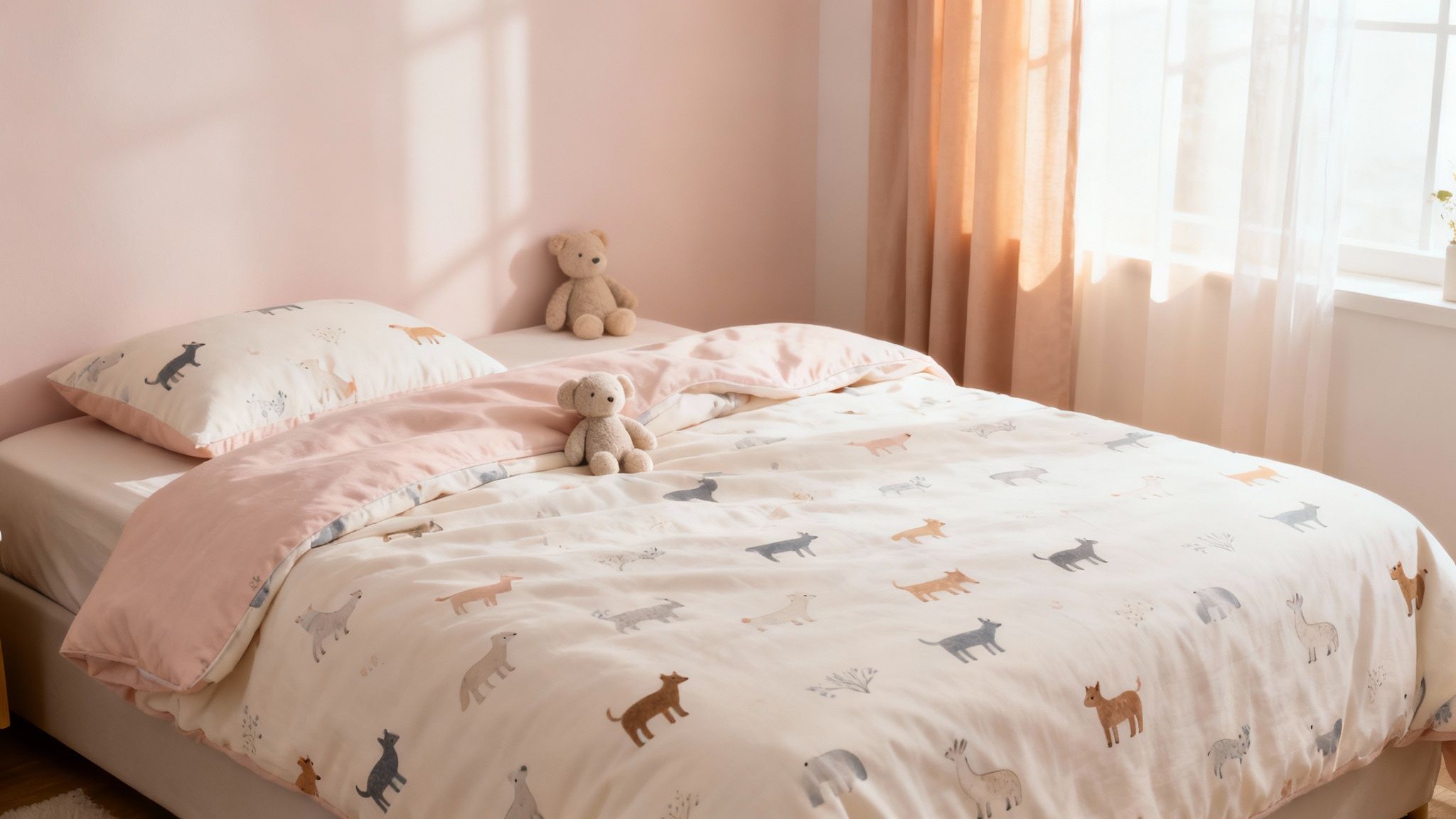
How to adapt the design for children of different ages?
It’s clear that each stage of development comes with different needs, so bedding design should grow along with the child. What suits a baby won’t necessarily appeal to a preschooler, and a teenager’s taste will be completely different again.
For babies (0–2 years)
At this age, the most important things are calmness and safety. A baby’s vision is still developing, so bright colors and overly busy patterns can be overwhelming and overstimulating.
- Colors: Choose soft, pastel tones — light blue, pink, soft green, or beige.
- Patterns: Minimalist, larger, and clear motifs work best, such as clouds, stars, or cute animals.
Soft tones and simple patterns create a calming atmosphere that helps babies relax and fall asleep more easily, without overstimulating their sensitive nervous system.
For preschoolers (2–6 years)
Children in this age range are actively exploring the world, and their imagination is boundless. Bedding can become a wonderful space for adventures and play.
- Themes: Choose bedding featuring your child’s favourite fairy-tale characters, animals, vehicles, or even educational elements.
- Purpose: Bedding with letters, numbers, or maps can become a fun way to learn before bedtime. The bed turns into a place not only for rest but also for discovery.
For school-age children (7 years and older)
During the school years and early teens, the bedroom becomes a personal sanctuary, and bedding becomes a form of self-expression. Make sure to let your child participate in choosing the design — this helps them feel respected and responsible for their own space.
- Style: Abstract patterns, geometric shapes, motifs related to favourite hobbies (sports, music), or simple, stylish solid-colour sets become very popular.
- Independence: Involve your teen in the decision-making process. It’s a great opportunity to nurture their taste and allow them to create a space where they truly feel comfortable.
The power of colour in a child’s room
Colours strongly influence our mood and emotions, and children are especially sensitive to them. A well-chosen colour palette can even improve sleep quality.
- Calming colours: Blue, green, and purple have a soothing effect, reduce anxiety, and help a child fall asleep faster.
- Warm and cozy colours: Soft shades of yellow, orange, or pink create a sense of comfort and safety.
- Colours to avoid: Bright red and overly intense colours can be stimulating, so they’re best avoided in a bedroom.
Practical bedding care tips
High-quality children’s bedding sets are not just a purchase — they’re an investment in your child’s peaceful sleep. With just a little care, they will stay beautiful and comfortable for a long time. The good news is that caring for cotton is very simple!
With proper care, bedding will maintain its vibrant colours and softness while ensuring a healthy sleep environment. The most important rule is to always check the care label, but there are also some universal tips that work every time.
First wash and daily routine
Before using new bedding for the first time, it’s essential to wash it. This isn't just a hygiene requirement — the first wash removes any dust from the manufacturing process, and the fabric becomes softer and gentler on your child’s sensitive skin.
Here are a few simple steps to help preserve the quality of your bedding:
- Turn inside out. Always turn duvet covers and pillowcases inside out before placing them in the washing machine. This simple trick helps protect colours from fading and keeps patterns vibrant for longer.
- Choose the right temperature. For cotton children's bedding, 40°C is more than enough. It effectively removes dirt and dust mites without damaging the fabric fibres.
- Use gentle detergents. The best choice is liquid, eco-friendly detergents without strong fragrances, phosphates, or harsh additives. This helps avoid any risk of skin irritation.
Avoid bleach and fabric softeners! Bleach weakens cotton fibres and fades colours. Fabric softeners, though they may sound appealing, coat the fabric with a chemical layer that prevents it from breathing and absorbing moisture.
Drying and ironing
Proper drying is just as important as washing. The best and most fabric-friendly method is to let the bedding dry naturally outdoors.
If you do choose to use a dryer, select a low or medium heat setting. Excessive heat can damage cotton fibres and cause the fabric to shrink. By the way, you can find more helpful tips in our article about Lithuanian bedding and how to care for it.
Cotton is easiest to iron when it’s still slightly damp — this helps wrinkles smooth out effortlessly. A hot iron not only gives the bedding a neat, crisp look but also acts as an additional disinfecting step, eliminating any remaining microorganisms.
By following these simple tips, your children’s bedding sets will stay soft, vibrant, and safe for your little one for a long time.
Why parents choose Rustilė bedding
When choosing children’s bedding sets, parents look for much more than just cute designs. They want peace of mind — the reassurance that their child is sleeping safely, comfortably, and healthily. These are exactly the principles we follow at Rustilė: reliability, safety, and exceptional quality. We believe this is why thousands of Lithuanian families trust us with their children’s sleep.
Our recipe for success is simple: impeccable quality, carefully selected fabrics, and a personal approach to every order. We fully understand how delicate and sensitive a child’s skin is, which is why we make no compromises — we sew exclusively with certified, safe materials.


Quality and safety you can trust
All Rustilė children’s bedding sets are made exclusively from 100% natural cotton. This fabric is a true lifesaver for sensitive skin. It allows the body to “breathe,” absorbs moisture well, and prevents overheating. This means one thing — deeper, more peaceful sleep without unnecessary wake-ups caused by discomfort.
But natural fibres are only part of the story. The fabrics we use meet the strict requirements of the Oeko-Tex Standard 100. In simple terms, this means they contain no harmful chemicals or allergens. Parents can rest easy knowing their child sleeps in a safe, healthy environment.
Rustilė’s commitment is more than just words. We offer a 365-night warranty on seams and zippers. This is our promise that your purchase will last long and remain reliable.
Custom sewing — when you need a perfect solution
We understand that every home and every child’s bed is unique. That’s why one of our most valued services is custom sewing according to your measurements. No more compromises with bedding that doesn’t fit!
- A perfect fit: Forget oversized, bunching sheets or covers that are too small. We will sew bedding that fits your child’s bed perfectly, no matter its size.
- Complete freedom to create: You can choose not only the size but also the fabric, colours, or even combine different patterns. It’s a wonderful way to create a unique set that blends beautifully into your home interior.
This service is especially helpful for parents with non-standard-sized cribs, mattresses, or simply those looking for something unique. Instead of searching endlessly in stores, just leave the task to us.
Easy shopping and peace-of-mind guarantees
We value your time and trust, so we aim to make your shopping experience as smooth as possible. We offer fast delivery throughout Lithuania and Europe.
And because we want you to feel completely confident about your choice, we provide a 30-night return guarantee — if the bedding doesn’t suit your needs for any reason, you can return it without any hassle. Our goal is simple: your happiness and your child’s good night’s sleep.
Frequently asked questions
When choosing children’s bedding, almost every parent has questions. And that’s completely natural — everyone wants to be sure they’re choosing the very best for their little one. To make your decision easier and more reassuring, we’ve gathered the most common questions and prepared clear, helpful answers.
Our goal is to make the search for bedding not a headache, but a pleasant experience. Here you’ll find all the essential information to feel confident.
How often should a child’s bedding be washed?
Hygiene in a child’s sleep environment is extremely important. We recommend changing and washing bedding at least once a week. This is a simple yet highly effective way to prevent dust mites, allergens, and bacteria.
Of course, there are exceptions. If your child has had a fever, sweated heavily, or had a small “accident” on the sheet, wash the bedding immediately — don’t wait until the end of the week.
A healthy, clean sleep environment is directly linked to high-quality rest. Regular washing is one of the most important principles of good sleep hygiene for children.
Is the Oeko-Tex certificate really that important?
Absolutely — and it’s definitely not just a marketing trick. The Oeko-Tex Standard 100 certificate is one of the most reliable guarantees of fabric safety. This international standard ensures that the product has been thoroughly tested and contains no harmful chemicals.
Choosing bedding with this label means you can be certain that your child’s sensitive skin won’t come into contact with pesticide residues, formaldehyde, or allergenic dyes. This is especially important for babies and children with allergies, whose skin reacts more easily.
At what age can a child start using a pillow?
When it comes to babies, safety is always the number one priority. Most pediatricians and sleep specialists agree that children under 2 years of age should not use a pillow at all. The main reason is the increased risk of suffocation.
Once your child passes the two-year mark, you can start looking for their first pillow. The most important thing is to choose one specifically designed for children — very thin, low-profile, and not too soft, ensuring proper head and neck support.
What if your child’s bed has non-standard dimensions?
This is actually quite common — maybe you have a vintage crib passed down from family, a custom-made bed frame, or just a mattress with unusual measurements. In such cases, the most practical and reliable solution is custom sewing.
Trying to fit standard-sized bedding often leads to frustration: oversized sheets bunch up and can even pose a safety risk, while too-small covers restrict movement. Custom-made children’s bedding sets ensure everything fits perfectly — providing comfort and, most importantly, safety.
Discover perfectly fitting, safe, and cozy solutions for your child’s sleep. At Rustilė, we offer a wide selection of 100% cotton fabrics and custom sewing services to make every night full of sweet dreams. Explore our collection at https://rustile.lt.
Leave a comment